

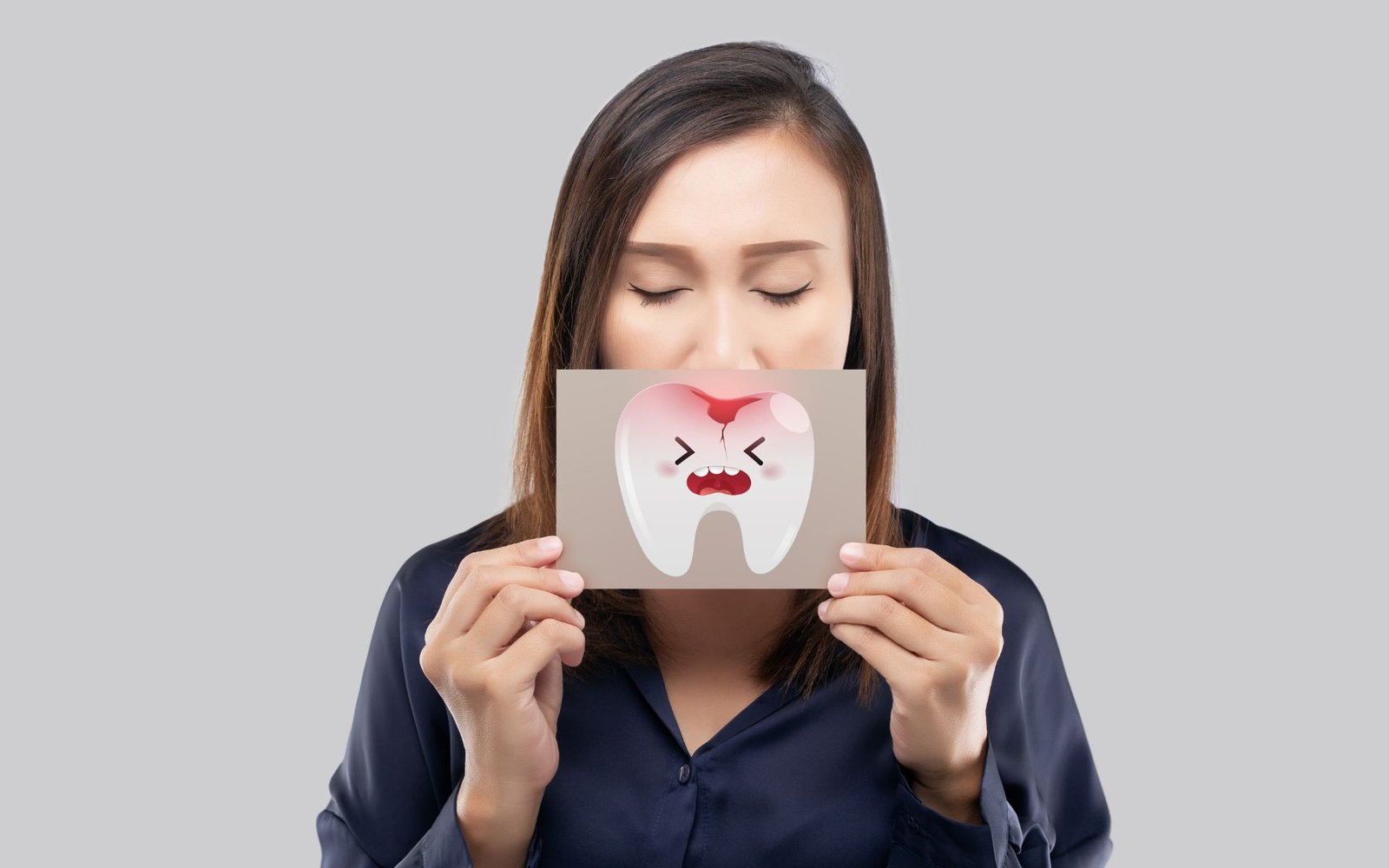
A broken or damaged tooth can happen unexpectedly while eating, playing sports, experiencing an accident, or simply due to long-term wear and tear. Sometimes a tooth develops a small crack or chip, while in other cases, a large portion of the tooth may break. Regardless of how it happens, broken tooth treatment in Mohali should begin with a professional dental examination.
Modern dentistry offers several options for restoring damaged teeth, including dental fillings, bonding, crowns, veneers, root canal treatment, and dental implants in cases where a tooth cannot be saved. The right treatment depends on the extent of damage, the condition of the tooth, the health of the surrounding gums, and whether the tooth’s nerve has been affected.
If you have a broken or damaged tooth in Mohali, Dr. Raman Sandhu Dental Clinic can evaluate the condition of your tooth and recommend an appropriate restoration based on your individual dental needs.
What Causes a Broken or Damaged Tooth?
Teeth are strong, but they can become damaged for several reasons. Some common causes include accidents, sports injuries, biting hard foods, untreated cavities, teeth grinding, and weakened teeth following previous dental procedures.
Common causes include:
- Biting hard foods or objects
- Accidental falls or facial injuries
- Sports-related injuries
- Tooth decay and large cavities
- Teeth grinding or clenching
- Age-related tooth wear
- Weak or heavily restored teeth
- Previous root canal treatment
- Sudden changes in biting forces
A tooth can also develop a crack without completely breaking. Because some cracks are difficult to see, dental examination is important when persistent pain or sensitivity occurs.
What Should You Do After Breaking a Tooth?
If you break a tooth, avoid chewing on the affected side until it has been examined. Rinse your mouth gently with water to remove debris and maintain normal oral hygiene without aggressively brushing the injured area.
If a piece of the tooth has broken off, you can keep it safely and take it to the dentist. Depending on the injury, your dentist may determine whether the fragment can be used as part of the restoration.
If the tooth is causing significant pain, swelling, bleeding, or sensitivity, arrange a dental evaluation as soon as possible.
Dental Examination for a Broken Tooth
The first step in treating a damaged tooth is determining the extent of the injury. A dentist may examine the tooth visually and assess its structure, bite, sensitivity, and surrounding gums. Dental X-rays may also be recommended when deeper damage is suspected.
The examination helps determine whether the damage involves:
- Only the outer enamel
- Enamel and dentin
- A significant portion of the crown
- The tooth’s pulp or nerve
- The root
- Supporting bone or gum tissue
Once the extent of the damage is understood, the dentist can discuss appropriate restoration options.
Modern Dental Restoration Options in Mohali
Modern dentistry provides several ways to restore broken, chipped, cracked, or weakened teeth. Treatment can range from a simple cosmetic repair to more extensive tooth replacement.
1. Dental Bonding for Minor Chips
Dental bonding can be an option for certain minor chips, small gaps, or cosmetic imperfections.
During bonding, a tooth-colored composite material is applied to the affected tooth and shaped to restore its appearance. The material is then hardened and polished.
Dental bonding can be useful when the tooth has relatively minor damage and sufficient healthy structure remains.
Patients looking for tooth bonding in Mohali can discuss whether this minimally invasive option is appropriate for their particular case.
2. Dental Fillings for Damaged or Decayed Teeth
If a broken portion of a tooth is associated with decay or a relatively small amount of structural loss, a dental filling may be considered.
Tooth-colored fillings can restore the affected area while maintaining a natural-looking appearance. However, fillings may not provide sufficient strength when a large portion of the tooth has been lost.
Your dentist will evaluate the remaining tooth structure before recommending a filling.
3. Dental Crowns for Severely Damaged Teeth
A dental crown in Mohali is one of the commonly used options for restoring a significantly damaged or weakened tooth.
A crown covers the visible portion of the tooth and can provide additional protection when enough healthy tooth structure remains.
Crowns may be recommended for teeth that are:
- Heavily damaged
- Significantly weakened
- Large-filled
- Cracked in suitable cases
- Treated with root canal therapy
Different crown materials are available, including tooth-colored and metal-free options. The appropriate material depends on the tooth’s location, function, appearance, bite, and clinical requirements.
4. Root Canal Treatment for an Infected or Damaged Nerve
Sometimes a broken tooth extends deep enough to affect the pulp or nerve. In such cases, simply repairing the outside of the tooth may not be sufficient.
Root canal treatment in Mohali can be used to remove infected or inflamed pulp tissue, clean the internal canals, and seal the tooth.
After root canal treatment, a dental crown may be recommended for additional protection, particularly when significant tooth structure has been lost.
Symptoms that may indicate deeper dental problems include:
- Persistent toothache
- Pain while chewing
- Prolonged sensitivity to hot or cold
- Swelling around the tooth
- Tenderness
- Darkening of the tooth
However, symptoms can vary, and some damaged teeth may have little or no pain. A dental examination is therefore important.
5. Dental Veneers for Certain Cosmetic Damage
For selected cosmetic cases involving front teeth, dental veneers in Mohali may be considered.
Veneers are thin, tooth-colored restorations designed to improve the appearance of the front surface of teeth. They may be suitable for certain minor chips, discoloration, irregular shapes, or cosmetic imperfections.
Veneers are not a universal solution for broken teeth. If a tooth has extensive structural damage, decay, or an affected nerve, a different restoration may be more appropriate.
6. Dental Crowns and Bridges for Tooth Restoration
When a tooth has lost considerable structure but can still be preserved, a dental crown may restore its function and appearance.
If a tooth cannot be saved and needs to be removed, a dental bridge in Mohali may be one possible replacement option. A bridge replaces the missing tooth with an artificial tooth supported by adjacent structures.
The suitability of a bridge depends on the condition of the surrounding teeth and other clinical factors.
7. Dental Implants When a Tooth Cannot Be Saved
In some cases, a tooth may be too severely damaged to restore. If extraction becomes necessary, dental implants in Mohali can be considered as a tooth replacement option.
A dental implant replaces the missing tooth root and can support a dental crown. It can provide a fixed tooth replacement solution for suitable patients.
Before implant treatment, the dentist evaluates the gums, available bone, bite, overall oral health, and other relevant factors.
Can a Broken Tooth Be Saved?
Whether a broken tooth can be saved depends on how much healthy tooth structure remains and whether the root and surrounding tissues are healthy.
A dentist may be able to restore a tooth with bonding, a filling, crown, or root canal treatment if sufficient healthy structure remains.
However, extraction may be necessary when the tooth is severely fractured, structurally compromised, or cannot be predictably restored.
The earlier a damaged tooth is examined, the sooner a dentist can determine the available treatment options.
Why Timely Treatment Matters
Ignoring a broken or damaged tooth can allow a relatively small problem to become more complicated. A damaged tooth may become more vulnerable to decay, further fracture, sensitivity, or infection.
For example, a small crack can sometimes progress if the tooth continues to experience heavy chewing forces. Similarly, a broken area can make it easier for bacteria to enter parts of the tooth that are difficult to clean.
Prompt dental assessment allows the dentist to evaluate the damage and discuss appropriate treatment before additional complications develop.
How to Prevent Tooth Damage
Although not every dental injury can be prevented, several habits can help protect your teeth.
Avoid chewing ice, hard objects, or items that are not meant to be eaten. If you participate in contact sports, consider using a properly fitted mouthguard. Maintain good oral hygiene and attend regular dental checkups to identify cavities or weakened teeth early.
If you grind or clench your teeth, discuss the habit with your dentist. Depending on the situation, a protective dental appliance may be recommended.
Broken Tooth Treatment in Mohali
A broken or damaged tooth does not always mean that the tooth needs to be removed. With modern restorative dentistry, many damaged teeth can be repaired or protected depending on the extent of the problem.
Dr. Raman Sandhu Dental Clinic in Mohali provides a range of restorative and cosmetic dental treatments, including dental fillings, root canal treatment, dental crowns, dental bridges, dental implants, veneers, dentures, smile designing, teeth whitening, braces, Invisalign, and general dentistry.
If you have a chipped, cracked, fractured, or severely damaged tooth, a professional examination can help identify the cause and determine the most suitable restoration.